This week, some of the biggest technology companies released AI helpers that don’t just answer questions. They do tasks on their own, and they keep working after you go home. Think of them as a new hire who never sleeps. For anyone in the field, the useful question isn’t how clever they are. It’s the question you’d ask about any new hire: what are they allowed to do without asking?
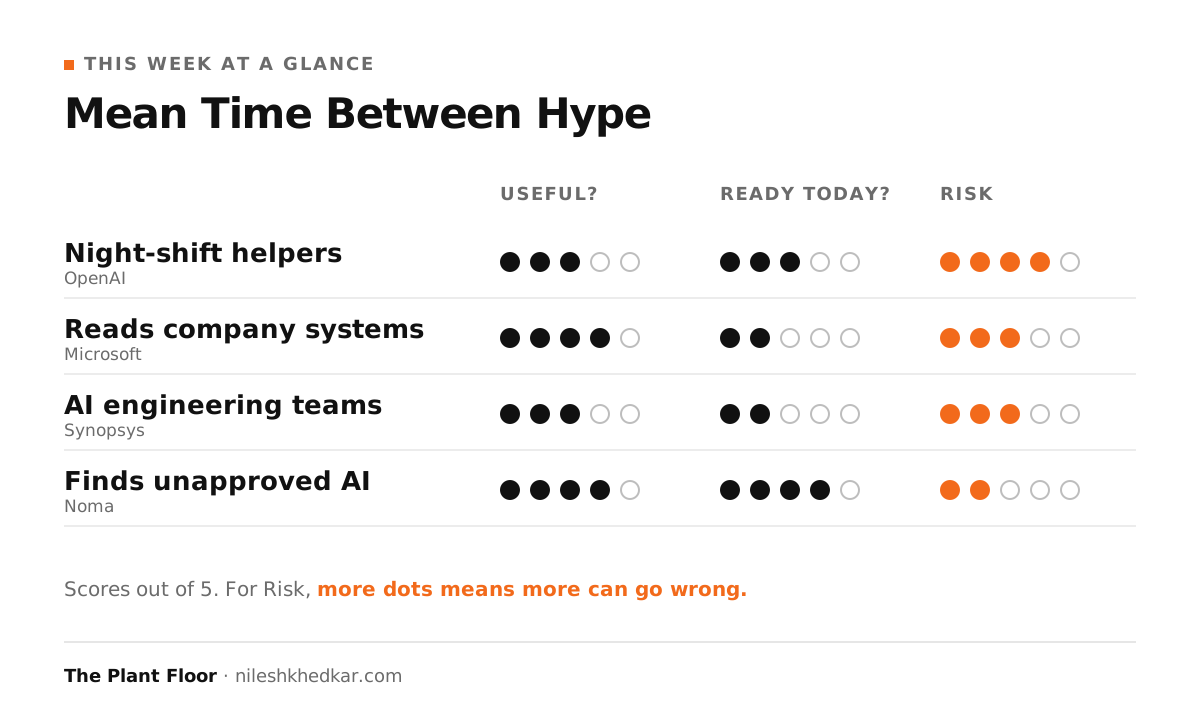
Words you’ll hear this week
- AI helper (tech people call it an “agent”): AI that does a task on its own, like chasing an email or filling in a form, instead of only answering questions.
- Maintenance system: the software where your work orders, equipment history and spare parts live.
- Unapproved AI: AI tools people install at work without anyone checking them first.
1. AI helpers that work the night shift
What happened: On 29 September, OpenAI, the company behind ChatGPT, released “dots”: AI helpers that keep working around the clock. They can read your email and other work tools, spot something that needs doing, and start on it. You check on them through ChatGPT or your work chat. Paying customers get them first, and large companies can switch on a trial.
Why you should care: Most AI waits for you to ask. These notice work and get on with it.
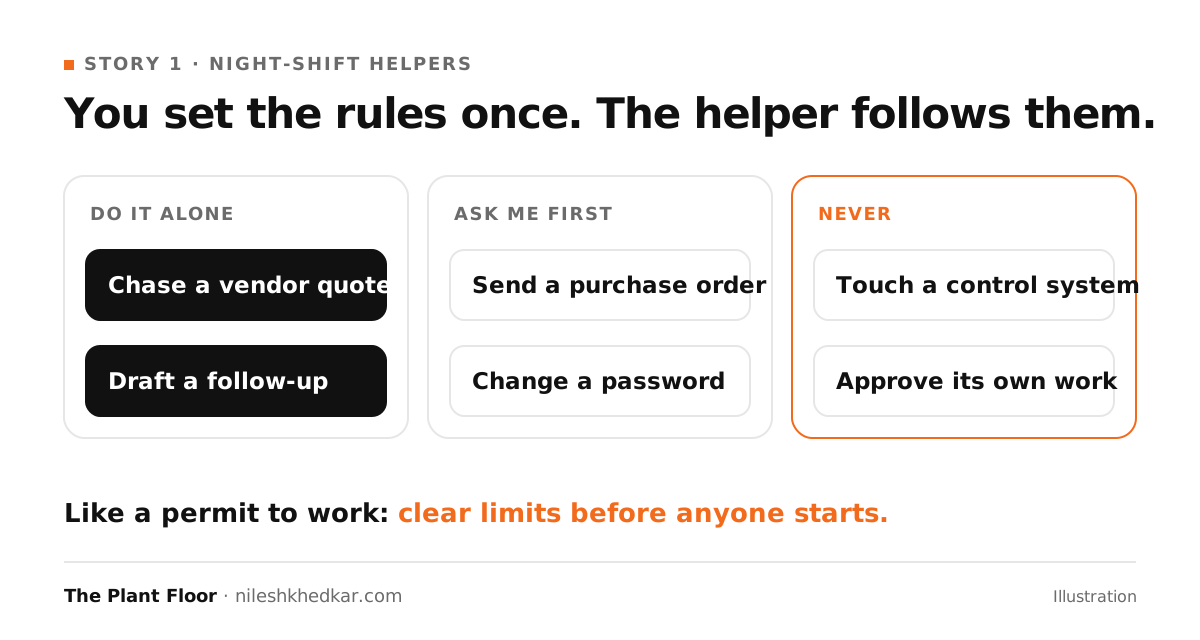
On the plant floor: Think of all the chasing in a maintenance week: spares for a job, a quote from a vendor, a permit that’s overdue, the follow-up nobody has time for. That’s the first job for a helper like this, and OpenAI is already testing versions for buying and invoicing. The part worth copying is the rulebook. You decide what the helper may do alone, what it must ask you first, and what it may never touch. It’s the same thinking as a permit to work: clear limits before anyone starts.
Mean Time Between Hype
| Question | Score | Why |
|---|---|---|
| Useful for our work? | ●●●○○ | Good for paperwork and chasing, not for running the plant |
| Ready to use today? | ●●●○○ | Out for paying users; the big-company version is still on trial |
| Risk if it goes wrong | ●●●●○ | It can read your email and files; OpenAI itself says to check important work |
2. AI that can read your company’s systems
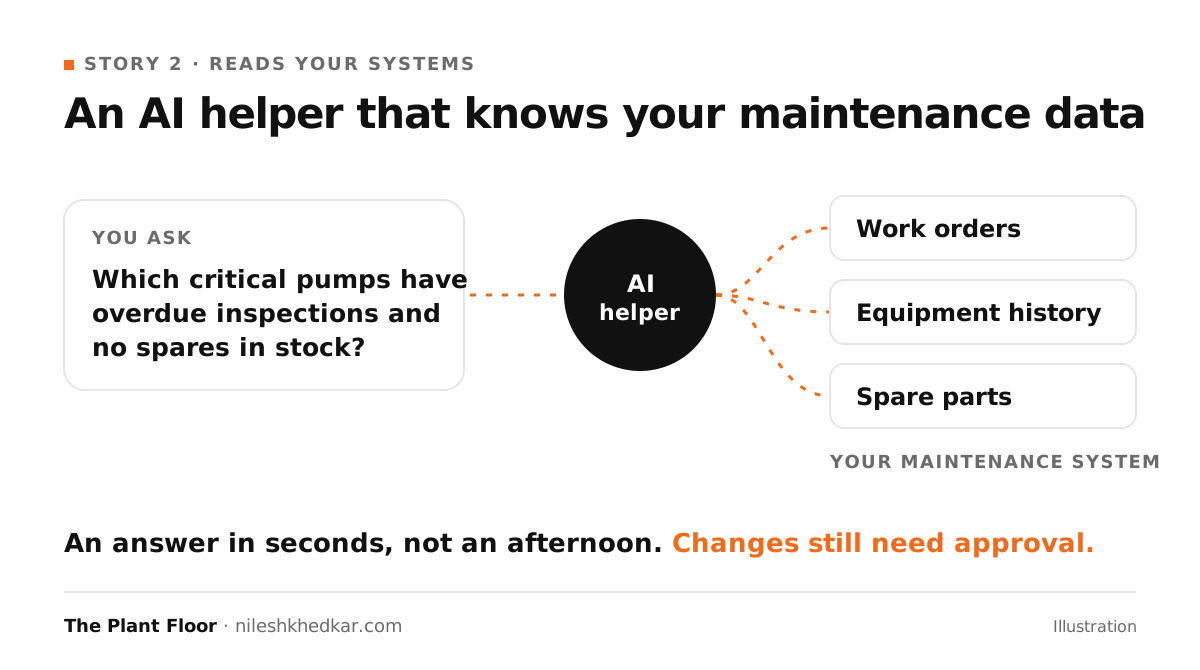
What happened: On 25 September, Microsoft relaunched Copilot, its AI assistant for work. You can now give a helper a job title and a goal, like tracking deadlines and reminding people. It is still with a small test group, and you pay for how much it does. On 30 September Microsoft also opened a trial of “Work IQ”. It lets these helpers read the company’s business software, and every change they want to make goes through the normal approvals.
Why you should care: An AI helper is only as good as what it knows. Give it your real data and it stops guessing.
On the plant floor: Maintenance runs on data: work orders, equipment history, spare parts. Today, if a supervisor asks “which critical pumps are overdue for inspection and have no spares in the store?”, someone loses an afternoon building a report. A helper that can read the maintenance system could answer in seconds. One thing to watch: when you pay for every task, a busy helper becomes a running cost, like fuel.
Mean Time Between Hype
| Question | Score | Why |
|---|---|---|
| Useful for our work? | ●●●●○ | This is where most of the value for maintenance sits |
| Ready to use today? | ●●○○○ | Still on trial, rolling out through October |
| Risk if it goes wrong | ●●●○○ | Approvals are built in, but it can change records |
3. AI teams take on whole engineering jobs
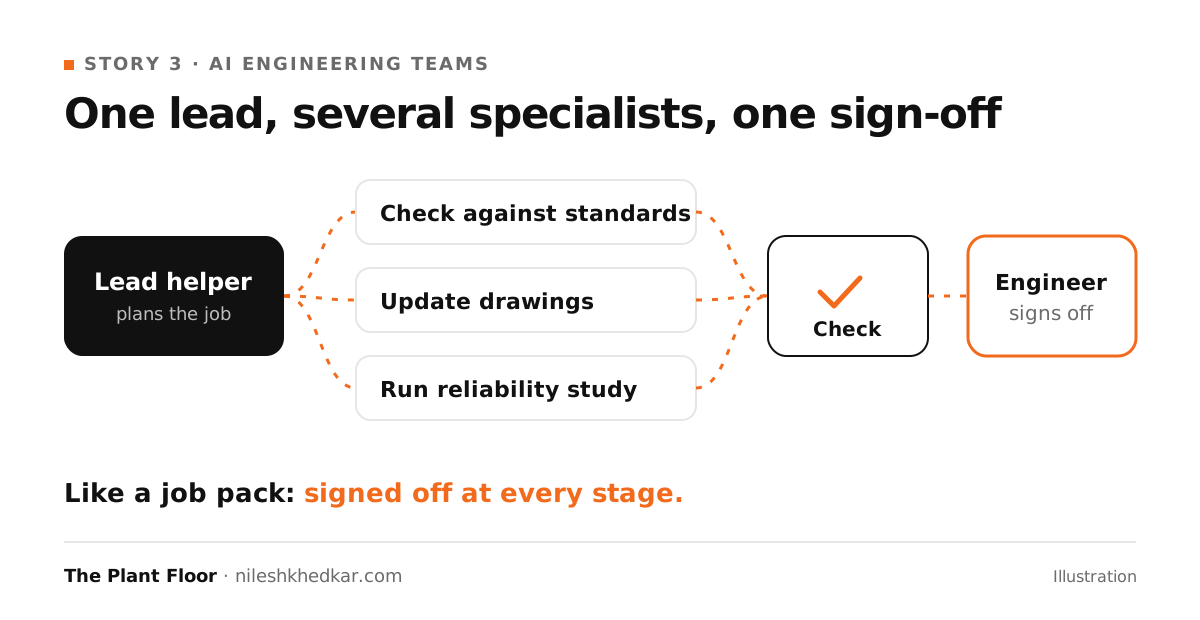
What happened: On 28 September, Synopsys, whose software is used to design computer chips, released AI helpers that handle a full engineering job from start to finish. A lead helper plans the work and hands pieces to specialist helpers. The company says more than 50 customers are trying it, with a full release by the end of 2026.
Why you should care: Chip design is precise work where a small mistake is very expensive. If engineers there trust AI with weeks-long jobs, other engineering fields will follow.
On the plant floor: Our engineering work has the same shape: checking a design against standards, updating drawings after a modification, running a reliability study. The idea to borrow is how the work is organized: one lead, several specialists, and a check after every step, like a job pack signed off at each stage.
Mean Time Between Hype
| Question | Score | Why |
|---|---|---|
| Useful for our work? | ●●●○○ | A way of working to learn from, not a product for plants |
| Ready to use today? | ●●○○○ | Customers are trying it; full release end of 2026 |
| Risk if it goes wrong | ●●●○○ | The speed claims come from the company itself; check before trusting |
4. Finding the AI nobody approved
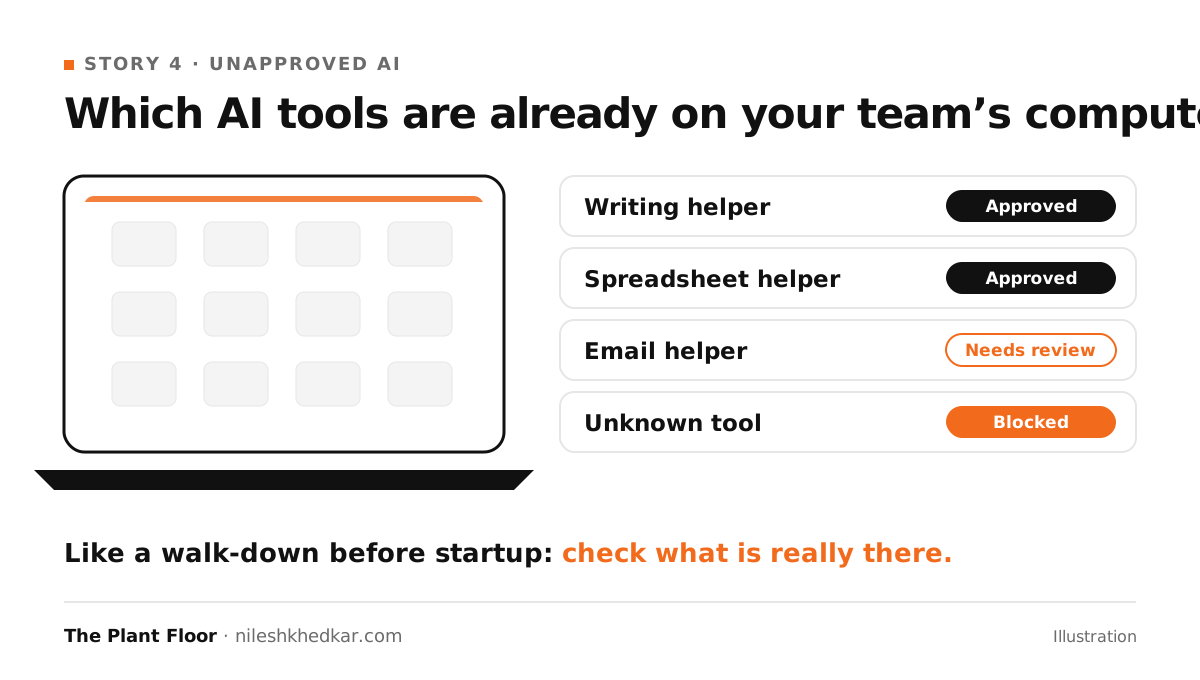
What happened: Also on 28 September, Noma, a company that protects businesses from online threats, released a tool that checks staff computers for AI helpers already installed. It lists each one, marks it approved or blocked, and watches that none of them send company information out.
Why you should care: A lot of AI arrived at work quietly, installed by people trying to get their job done, without anyone checking it.
On the plant floor: Engineers and planners install AI helpers that can open files and run programs, sometimes on computers close to the control room. Before a site brings in more AI, it should know what is already there. Think of it as a walk-down before startup: check what is actually in place, not what the drawings say.
Mean Time Between Hype
| Question | Score | Why |
|---|---|---|
| Useful for our work? | ●●●●○ | Every site will face this question |
| Ready to use today? | ●●●●○ | Available now |
| Risk if it goes wrong | ●●○○○ | It lowers risk, as long as it doesn’t block useful tools |
Deep dive: following steps vs. making decisions
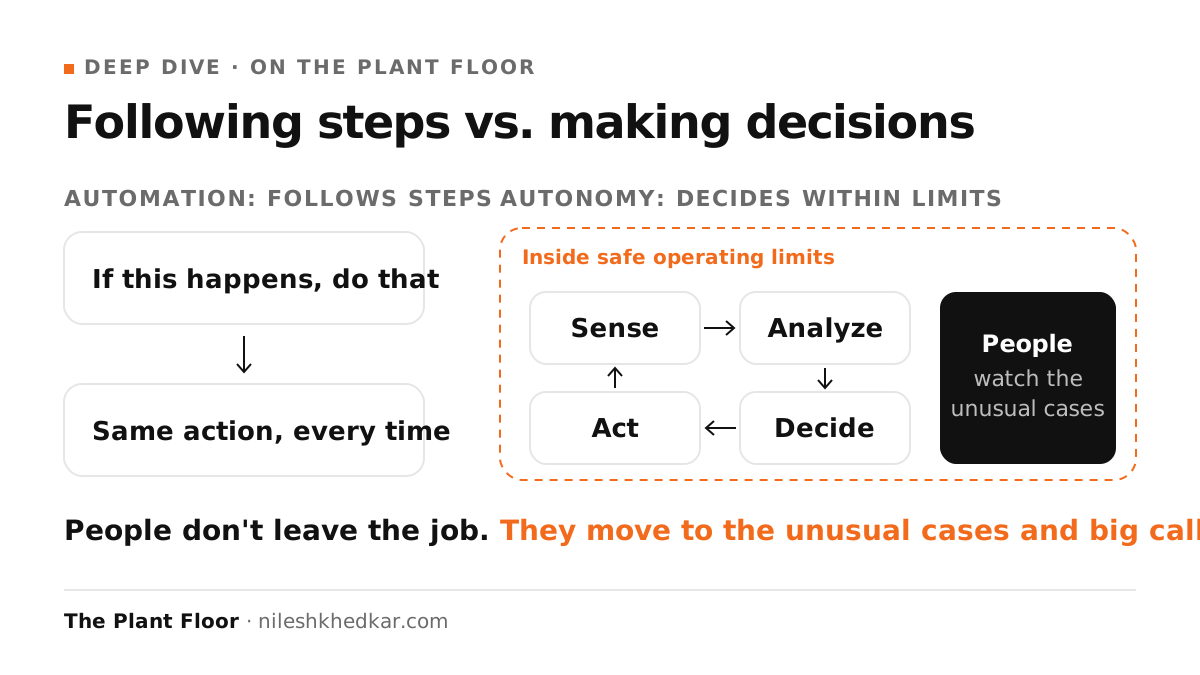
The office helpers above have a cousin on the plant floor. In a World Oil article this month, Greg Trostel of Rockwell Automation explains the difference simply. Automation follows fixed steps: if this happens, do that, every time. Autonomy goes a step further. It notices something has changed, works out what it means, decides what to do and does it, but only inside safe operating limits that people set.
His examples are practical. One oil producer used smarter control across 35 pumps and raised water injection by about 36,000 barrels a day. Health scores that track equipment wear can show a machine getting worse before it fails. He also names two traps that will sound familiar: trials that never get rolled out across the site, and more connections giving hackers more ways in.
The key point: people don’t leave the job. They move from doing the routine work to watching the unusual cases and making the big calls. It’s the same rulebook question as this week’s office helpers.
Try this week: teach AI your checklist once
Most AI tools now let you save written instructions for a job, often called a “skill”, so you don’t have to explain it every time. It’s like a job card: what the job is, the steps, and what “done” looks like. More than 40 AI tools read the same card format, including ChatGPT and Claude. Try it with one checklist you know by heart, like a pump pre-start check, and see how well the AI follows it.
Beyond oil & gas
- Power companies: AI helpers chasing crews, materials and permits during outage work.
- Factories: AI teams preparing design-change packages for an engineer to sign off.
- Hospitals: AI helpers handling paperwork, with strict rules on what needs a person’s approval.
Your turn: which job in your plant would you trust an AI helper to do overnight, and which would you never hand over?
Sources
- The Next Web: OpenAI launches dots, always-on AI agents with their own cloud computers
- Fortune: Microsoft unveils Copilot super app, targeting business users with AI agents
- Microsoft Dynamics 365 Blog: Work IQ, business and workplace intelligence in the flow of work
- Synopsys: Autonomous engineering with long-horizon agents and the Autopilot platform
- VMblog: Noma extends agent security and governance to the employee endpoint
- World Oil: From automation to autonomy, building the next oil and gas operating model
- Atlan: Agent Skills explained, SKILL.md format and adoption